Pasta alla Gricia
By Culiora
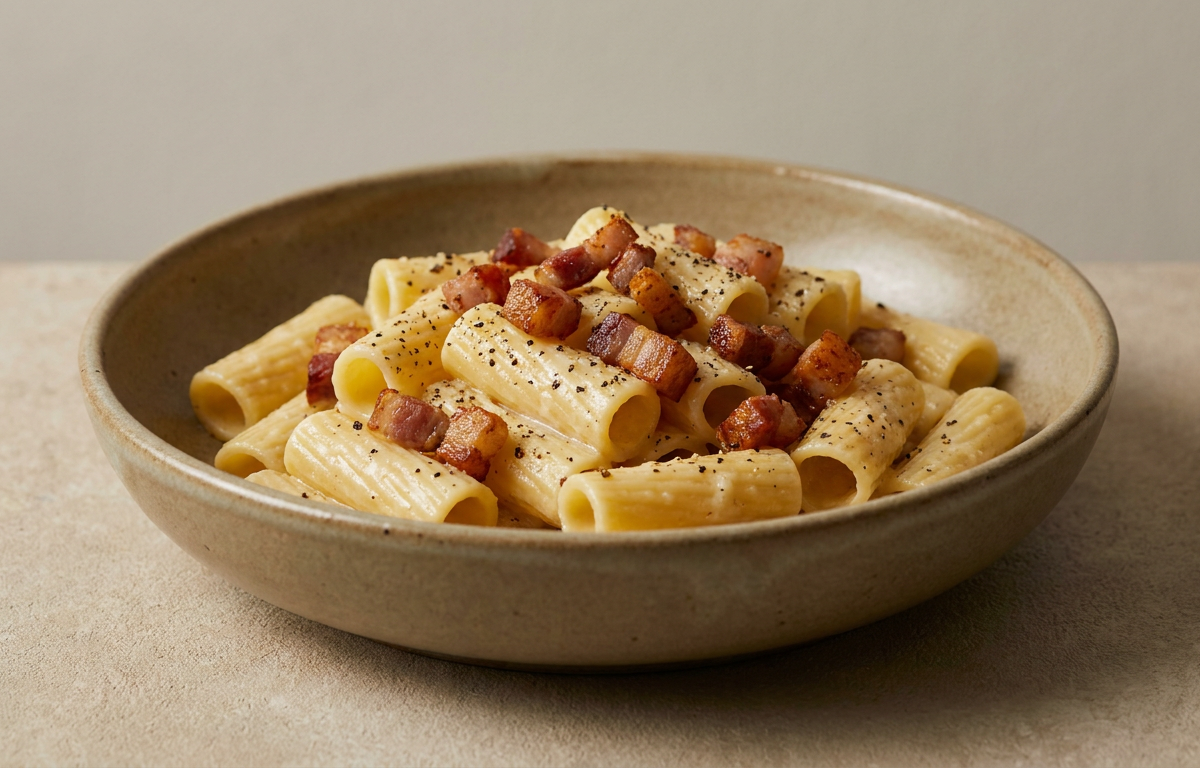
Pasta alla gricia is one of Rome's four classic pasta pillars, considered the direct ancestor to amatriciana and carbonara. Crispy cured guanciale, rendered pork fat, freshly cracked black pepper, and sharp Pecorino Romano emulsify with starchy pasta water into a glossy, velvety sauce.
- Servings: 4
- Prep time: 10 min
- Cook time: 20 min
- Total time: 30 min
Ingredients
- 400 g rigatoni or spaghetti
- 250 g guanciale, rind removed and cut into 1 cm thick strips
- 120 g Pecorino Romano, finely grated
- 2 tsp black peppercorns, coarsely crushed
- 1 tbsp coarse sea salt (for pasta water)
Instructions
- Bring a large pot of water (about 3.5 to 4 litres) to a boil. Add 1 tbsp coarse salt, keeping it lighter than usual since both guanciale and Pecorino Romano are naturally salty.
- Place the cut guanciale into a wide, cold skillet or sauté pan over medium-low heat. Cook slowly for 8-10 minutes, stirring occasionally, until the fat renders out completely and the exterior is golden and crisp while the inside remains tender.
- Transfer the crisped guanciale to a small bowl with a slotted spoon, leaving the rendered fat in the skillet. Keep the pan off the heat for a moment.
- Drop the pasta (rigatoni or spaghetti) into the boiling water and cook until 2 minutes shy of al dente according to the package directions.
- Return the skillet with the rendered pork fat to low heat. Add the coarsely crushed black pepper and toast it gently in the fat for 1 minute until fragrant.
- Ladle about 100 ml of starchy pasta cooking water into the skillet with the rendered fat and pepper, swirling vigorously over medium heat to begin forming an emulsion.
- Using tongs or a spider strainer, transfer the undercooked pasta directly into the skillet with the bubbling fat and water. Toss constantly over medium-high heat for 1 to 2 minutes, adding another splash of pasta water if necessary, until the pasta is perfectly al dente and coated in a light glossy glaze.
- Remove the skillet completely from the heat and let it cool for 30 to 45 seconds so the cheese does not clump or turn grainy. Gradually sprinkle in three-quarters of the grated Pecorino Romano along with 2-3 tablespoons of warm pasta water, tossing and stirring vigorously until a smooth, velvety sauce forms.
- Fold in half of the crispy guanciale. Divide the pasta among warm bowls, then top with the remaining crispy guanciale, the rest of the Pecorino Romano, and an extra dusting of freshly ground black pepper. Serve immediately.
Tips
- Never let the skillet stay on the direct flame when stirring in the Pecorino Romano; excessive heat causes proteins in sheep's milk cheese to seize into rubbery clumps.
- Grate the Pecorino Romano on the finest microplane or rasp possible so it melts instantly into the warm liquid without clumping.
- Guanciale (cured pork jowl) provides an essential herbal, rich flavour profile; if unavailable, unsmoked pancetta cut thick is the next best substitute, though it lacks the distinctive fat-to-meat texture.